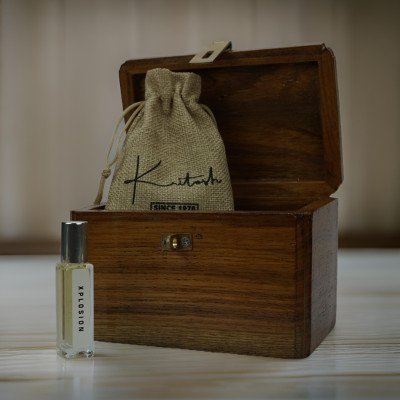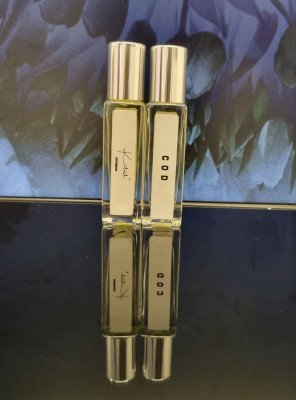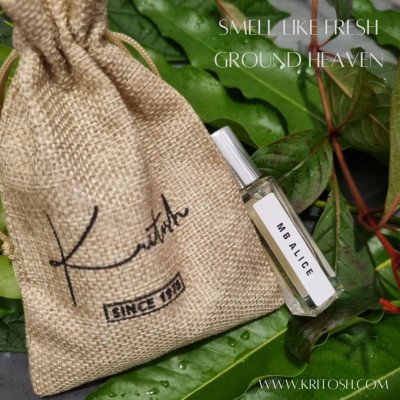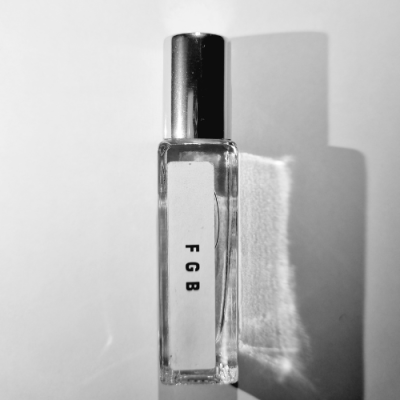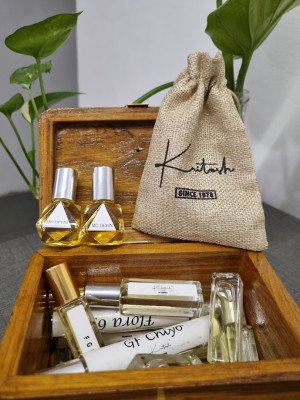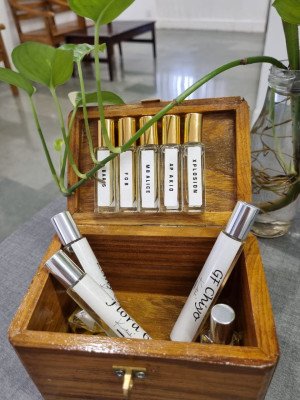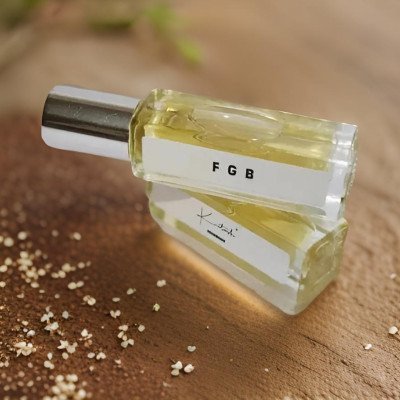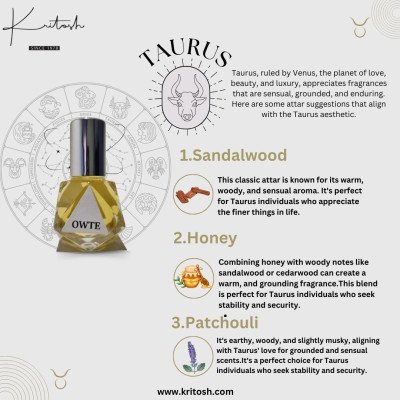

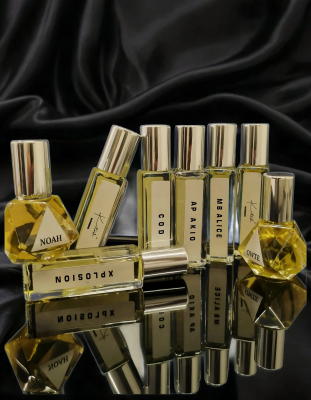

The Fragrance That Travels With You
There is a particular moment in every journey, usually somewhere between the airport taxi and the hotel lift, when the familiar begins to thin out. The route is no longer yours. The air smells of a different city: wet stone, frying oil, jet fuel, cut flowers at a station kiosk, the faint chill of recycled cabin air. Then you reach a room that belongs to no one in particular, set down your bag, and open a small bottle. A single touch at the wrist, and for a moment the place rearranges itself around something you know.
That is the quiet argument for carrying a fragrance with you. A scent is one of the few personal objects that does not take up space and does not need a charger, yet it can make an unfamiliar room feel briefly like your own. Travellers have always understood this in their own way: the tin of a particular tea, a worn shawl, a notebook with a favourite pen. Fragrance belongs on that list, and attar, with its small bottles and its measured, close-to-the-skin way of being worn, is well suited to the role.
But suitability is not automatic. Choosing the best attar for travel is not the same as picking the smallest bottle on the shelf or the most admired scent in the collection. A fragrance that feels graceful in a cool Bhopal evening may feel heavy in a sealed aircraft cabin. A beautifully cut glass bottle may be a poor companion to a cabin bag that gets tossed under a seat. A scent you love at home may be wrong for a three-day business trip where you will spend most of the time in air-conditioned meeting rooms.
This guide is written for the traveller who wants to get it right: someone who enjoys fragrance, takes some care over what they carry, and would rather make one good decision than five hasty ones. It looks at what makes an attar travel-friendly, how different travel styles call for different choices, how to understand fragrance families without treating them as rules, how to pack and carry a bottle responsibly, what to know about flying with attar, and how to apply it considerately when you are sharing space with strangers. It also looks, briefly and honestly, at where the romance of the idea meets the practical limits of luggage, regulations and climate.
A note on language. Throughout this article we use the words attar, fragrance and scent rather than perfume, because attars are traditionally oil-based and sit in a different category from alcohol-based sprays. Where a comparison with other formats is useful, we try to be precise about it.
Why Attar Can Be Appealing to Travellers
Attar, in the traditional sense, is a fragrance oil: a concentrated aromatic preparation worn on the skin rather than sprayed into the air. Its appeal for travel comes from a handful of qualities that are worth separating from one another, because they are not all equally true of every bottle.
Compact by nature
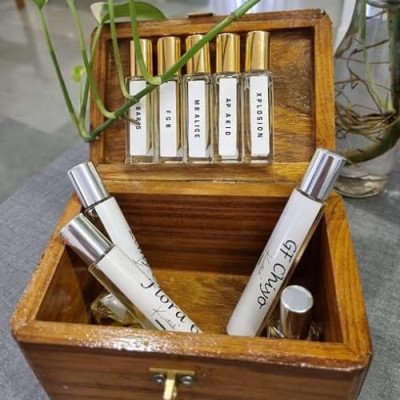
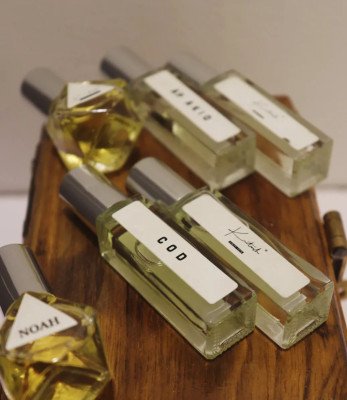
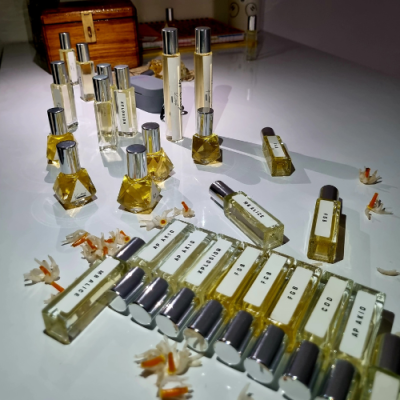
Most attars are sold in small bottles, often considerably smaller than the sprays people carry in their wash bags. A small bottle fits in a coat pocket, a pouch inside a handbag, or the corner of a shaving kit. For travellers who count every gram of luggage, or who simply dislike a cluttered bag, this is a real advantage.
Controlled, close application
Because attar is usually applied with a wand, a rollerball or a fingertip, you decide exactly how much to use and where. There is no cloud of spray that drifts toward the person in the next seat. For shared environments such as trains, aircraft, hotel lifts and offices, that control is a form of courtesy as much as convenience.
A small quantity goes a long way, but this varies
Many people find that a little attar is enough. That said, formulations differ. Some are rich and dense, others are light and airy, and the way a given oil behaves depends on its composition, the way it is applied, the temperature, and the wearer's own skin. It would be inaccurate to say all attars are strong or that all of them last longer than every other format. The honest position is that attar rewards a light hand, and that you should test a bottle before relying on it for a long trip.
The comfort of a ritual
Perhaps the most underrated reason to travel with attar is the ritual it offers. Dressing for a day in a new city can feel rushed or disorienting. Applying the same scent at the same point in the morning, in the same unhurried way, gives the day a familiar opening. Travellers often describe this as grounding; it is a small, private routine in a schedule that otherwise belongs to airlines and timetables.
Potential versatility
A well-chosen attar can move between a daytime sightseeing walk and a quiet dinner without needing to change. A softer, more balanced scent often manages this better than a very intense or highly specific one. We return to this idea in the section on choosing for different occasions.
The difference between convenience and suitability
It is easy to confuse these two. A bottle can be convenient, small and light, and still be unsuitable: because its closure is loose, because its scent is too assertive for the setting, or because its container size breaks airport security rules. Convenience is a feature of the bottle. Suitability is a relationship between the bottle, the scent, the traveller and the trip.
The limitations worth knowing
Being honest about attar's limits makes the rest of the advice more trustworthy.
- Leakage is possible. Oil can seep through a poorly seated stopper, and pressure changes and rough handling do not help. No packing method removes the risk entirely; good packing reduces it.
- Intensity varies. Some formulations are quite concentrated. Applied generously in a small, closed space, they can overwhelm.
- Glass is fragile. Many attar bottles are glass, which is lovely to look at and unforgiving in luggage.
- Rules still apply. Being small and oil-based does not exempt a bottle from airport security regulations. The container, not just the contents, may matter.
- Preference is personal. What one person finds warm and comforting, another may find too heavy. Travel does not change that.
None of these is a reason to avoid attar. They are reasons to choose with thought.
What Makes an Attar Truly Travel-Friendly?
It helps to treat the decision as a framework rather than a single question. Below are the dimensions worth weighing. You do not need to score a bottle on all of them, but you should know which matter most to you.
Bottle size and portability
Smaller is usually easier to carry, but smaller is not always better. A very small bottle may run out before the trip does, or tempt you to apply more sparingly than you would like. A larger bottle may be better value at home but is awkward on the road and, as we discuss later, may be subject to cabin restrictions based on the container's capacity. For a trip of a few days, a small bottle is typically sufficient; for a longer trip, think in terms of how many applications you realistically expect and add a modest margin.
Material and durability
Glass is common and elegant, and it protects the oil well from interaction with the container. It is also the material most likely to chip, crack or shatter. Some travellers prefer a sturdier container, a protective sleeve or a padded pouch. If you love a particular glass bottle, you can carry it, but plan to protect it. The point is not that glass is wrong; it is that a delicate bottle needs a plan.
Closure quality
The closure is the most important part of any travel bottle. Look at how it seats. A snug screw cap, a well-fitted stopper or a firmly pressed roller can all work, but each fails in its own way. A stopper that pulls out easily, a roller ball that sits loosely, or a cap that does not thread cleanly are all warning signs. Before any trip, close the bottle, hold it upside down over a tissue for a moment, and see whether anything seeps. This is a simple test and it is worth doing.
Ease of application
A roller or a slender glass wand makes quick, discreet application easier than a wide neck that tips the oil onto your fingers. In a cramped airline washroom or a hurried hotel morning, you will be glad of a mechanism that is controlled and tidy.
Fragrance versatility
A travel attar is often asked to do more than one job. Ask yourself how it will read at breakfast, in a meeting, on a walk and at dinner. Scents with a balanced character, neither strikingly sharp nor intensely heavy, tend to be more adaptable. Highly specific scents can be wonderful, but they may be a poorer fit for a trip with varied plans.
Personal preference
This cannot be overstated. The most technically perfect travel attar will fail if you do not enjoy wearing it. Travel is already full of compromises; your fragrance does not need to be one of them.
Suitability for shared environments
Aircraft cabins, trains, buses, hotel lifts and open-plan offices are enclosed. A scent that feels pleasant on a terrace may feel strong in a lift. Choose something you can wear lightly, and consider how it will read at close quarters.
Storage requirsement
Fragrance oils generally prefer to be kept away from prolonged heat and direct sunlight. In practical terms, that means not leaving a bottle on a car dashboard or a sunny windowsill, and not packing it against a heat source. We do not suggest specific temperatures, because they cannot be responsibly generalised.
Compliance with travel regulations
If you are flying, the container size and how you pack it will matter. We cover this in detail in a later section; for now, note only that regulations can differ between cabin and checked baggage, and between routes.
Value relative to trip length and use
If you will use a fragrance daily for a week, a small bottle is sufficient. If you are away for a month, plan more carefully. If you will only wear it on one or two evenings, a very small quantity is plenty and a larger bottle would be wasted weight.
Why a beautiful bottle is not always the practical one
Consider two examples. In the first, a traveller brings a decorative, heavy cut-glass bottle with a tall stopper because it is their favourite at home. In a cabin bag that is squeezed into an overhead locker, the stopper loosens slightly and oil seeps into the lining. In the second, a traveller carries the same scent decanted into a small, sturdy bottle with a secure screw cap, wrapped in a soft pouch. The fragrance is the same. The experience is not.
The lesson is not that beauty is a mistake. It is that the ideal travel companion may look different from the ideal object on a dressing table. Many seasoned travellers keep a beautiful bottle at home and use a plainer, more reliable one on the road.
Choosing Attar for Different Travel Styles
There is no single travel attar. The right choice depends on what the journey asks of you. The following travel styles are not rigid categories; they are lenses.
Business trips
Business travel tends to combine long stretches in climate-controlled rooms with moments of quick transition: a taxi, a lift, a handshake, a dinner. The fragrance that works here is usually composed and restrained.
- Professional settings. In meetings and offices, subtlety is a virtue. A light application, ideally on a pulse point you can reach discreetly, tends to read as polish rather than presence.
- Commuting and hotel stays. Hotel rooms are often small and heavily air-conditioned. A fragrance applied lightly in the morning and left alone usually behaves better than one reapplied repeatedly.
- Evening engagements. If the day ends with dinner, you may want a slightly warmer or deeper scent available. This is where a second small bottle can be genuinely useful, and where a single versatile choice can also be enough if its character is balanced.
The most common business-travel mistake is wearing a scent that is too assertive for the room. When in doubt, use less.
Weekend getaways
A weekend away is about ease. You are sightseeing, eating well, changing plans, perhaps walking a great deal. The scent you want is one that does not require a decision at every turn. A balanced, adaptable attar, one you would happily wear from a morning stroll to a relaxed dinner, is ideal. Because the trip is short, a single small bottle is often entirely sufficient.
Family visits and celebrations
Family gatherings are crowded, affectionate and often warm, in both senses. Fragrance here is about harmony. You may be hugging relatives, sitting close at meals, and sharing small rooms. A soft, familiar-feeling scent applied sparingly is usually welcomed; a dramatic one may not be. Many Indian households have their own long relationships with particular scents, and a considerate guest takes that into account. If you are unsure, choose gently.
Outdoor travel
Trekking, beach days, safaris and long drives introduce heat, sweat, dust and rough handling. For these trips, packaging matters more than usual. Prefer a sturdy container, wrap it well, and keep it out of direct sun, for instance in a shaded inner compartment rather than an outer pocket. In hot, active conditions, a lighter application is often more comfortable, and you may prefer to apply it after cooling down and freshening up rather than before an exertion.
Romantic holidays
A romantic trip is a good occasion for a scent that feels personal and memorable. This is where preference leads. Some people reach for something soft and floral, others for something warm and amber-like, others for a clean, woody scent. There is no rule. What matters is that it is yours, and that you apply it with care, since closeness is part of the occasion and a lighter touch often reads as more intimate than a heavier one.
Long journeys
On a long flight or a train journey of many hours, you are in a confined space with many other people. Here, consideration is the main principle. Many travellers prefer to apply their scent after arrival rather than before or during a long journey. If you do apply it, use a very small amount. Remember that people in an aircraft cabin cannot move away from a strong fragrance.
Cultural and religious visits
Visiting temples, mosques, gurdwaras, churches, monasteries or other places of worship, or attending religious ceremonies, calls for sensitivity. Customs differ widely between communities and destinations, and it would be a mistake to assume one rule applies everywhere. In some settings, wearing fragrance is entirely welcome or even customary; in others, you may be asked to avoid strong scents, or to attend without any. If you are unsure, ask your host or consult the place's guidance. A light, unobtrusive application, or none at all, is usually the respectful choice when you do not know.
Across all of these, the principle is the same: your travel style shapes your fragrance decision. It does not prescribe it.
Fresh, Woody, Floral or Warm? Understanding Fragrance Families for Travel
Fragrance families are a vocabulary, a way of describing what a scent tends to feel like. They are useful, but they are guides rather than rules. Individual attars often blend several characters, and the same scent can feel different on different people and in different conditions. Use the descriptions below as starting points for your own exploration.
Fresh and citrus-inspired profiles
Fresh scents tend to feel bright, clean and airy. They evoke early mornings, open windows, cut citrus and water. Many travellers enjoy them for daytime wear and for moments when they want to feel awake and light. They can suit a morning walk, a business breakfast or a day of sightseeing. Note that some very light, volatile scents can feel fleeting to some wearers; whether that is a drawback depends on your preference.
Woody profiles
Woody scents tend to feel grounded, calm and steady. They bring to mind sandalwood-like warmth, dry timber, forest floors and sunlit libraries. Many people find them comfortable and unobtrusive, which makes them adaptable between daytime and evening. They can suit business trips, quiet holidays and long journeys where you want something composed. Woody does not mean heavy; there are woods that read as soft and others that read as dense.
Floral profiles
Floral scents range from delicate and green to rich and lush. They can feel romantic, gentle, celebratory or nostalgic, depending on the flower and the composition. They have a long history in Indian fragrance culture. For travel, they can be a lovely choice for family gatherings, romantic holidays and festive occasions. As ever, intensity varies widely: a soft floral may be quietly charming, while a dense one may require a very light hand in enclosed spaces.
Musky profiles
Musky scents tend to feel soft, skin-like and comforting. They often read as intimate and quiet, the sort of scent that seems to belong to the wearer rather than announce itself. Many travellers find them easy and unobtrusive, which can suit shared environments. Musk profiles can also work as a subtle base beneath other characters.
Warm and spicy profiles
Warm, spicy scents bring to mind cardamom, clove, cinnamon and similar associations: richness, comfort, celebration. They can feel inviting on cool evenings or in festive settings. They can also feel heavy in very hot, humid conditions or in confined spaces, so a light application is wise. The point is not that they are wrong for warm weather, but that they reward restraint.
Amber-like profiles
Amber-like profiles are often described as warm, resinous and softly sweet, with a glowing, enveloping quality. They can feel sophisticated and relaxing, and they pair naturally with evenings. They tend to be more noticeable than lighter scents, which makes them worth applying carefully when you are sharing space.
Balanced and versatile compositions
Many of the most travel-friendly attars are not strongly one family. A balanced composition might combine a gentle floral heart, a woody base and a touch of freshness, offering something that adapts across different moments of the day. These are often the safest answer when you can carry only one bottle.
Guides, not rigid rules
It would be easy to say that fresh scents are for summer and warm scents are for winter, or that florals are for women and woods for men. These statements are neither reliable nor kind to individual taste. People enjoy fragrance across these boundaries, and climate, skin and context change how a scent behaves. Treat the families as a map, not a verdict.
One Attar or Multiple Attars: What Should You Pack?
The question of how many attars to carry is where practicality and pleasure meet. The right answer depends on your trip, your luggage and your habits.
The case for one
Carrying a single, versatile attar is the simplest approach. It reduces weight, lowers the risk of leakage, simplifies security screening, and removes decisions. It also builds a stronger association: the scent becomes the fragrance of that trip. The trade-off is that you must choose well, since one bottle has to cover the whole itinerary.
The case for a small selection
Carrying two or three gives you flexibility. You can match mood, occasion or weather. The trade-offs are more weight and more bottles to protect, and the temptation to pack more than you will use. A small selection makes most sense on longer trips with a clear difference between daytime and evening, or between formal and relaxed settings.
We would add a caution: do not buy extra bottles simply because you are travelling. The best travel kit is the one you will actually use.
Practical kit examples
- The minimalist kit. One balanced attar in a secure, small bottle, wrapped in a soft pouch. Suitable for a weekend or a short business trip.
- The two-attar kit. One lighter, fresher or softer scent for daytime, and one warmer or deeper scent for evening. Suitable for a week-long trip with varied plans.
- The longer-trip selection. Two or three small bottles, chosen to cover three moods, such as a calm everyday scent, a celebratory one and a quiet, comforting one for the end of the day. Suitable for extended holidays.
- The business-travel kit. One restrained, composed scent for meetings, and optionally a second, slightly richer scent for evening events. Keep both small and well sealed.
- The holiday kit. One easy, airy scent for days out, and one you associate with the occasion, whether a celebration, a romantic evening or a family gathering.
A comparison to help you decide
| Approach | Best for | Advantages | Trade-offs |
|---|---|---|---|
| One versatile attar | Short trips, light luggage | Simple, light, fewer leakage risks | Must suit every setting |
| Two attars (day and evening) | Week-long trips, mixed plans | Flexibility, mood matching | Slightly more to pack and protect |
| Small selection of three | Longer holidays, varied climates | Wide range, personal variety | More weight, more risk, more choices |
Deciding with discipline
Consider trip duration, itinerary, luggage space, preference and baggage requirements. If your bag is already full, or if you are travelling hand-baggage only, one bottle is a perfectly elegant answer. If you are away for a long time and enjoy variety, a few small bottles are reasonable. In either case, resist the pull of excess.
How to Pack Attar Without Worrying About Leakage
Good packing is a habit, not a trick. The aim is to reduce risk sensibly, and it is worth saying plainly at the outset that no method guarantees a bottle will never leak. What follows are precautions that experienced travellers tend to find worthwhile.
Check the closure before you leave
A day or two before departure, inspect the bottle. Is the cap threaded cleanly? Does the stopper seat firmly? Is the neck free of residue that might prevent a tight seal? Wipe the neck and threads with a clean, dry cloth. Then, as suggested earlier, close the bottle and hold it upside down over a tissue for a few seconds. If you see any seepage, change the container or the closure before you travel.
Make sure it is properly sealed
Press or screw the closure until it is secure, but not so forcefully that you strain the threads or the glass. Some travellers add a thin wrap of tape around the closure, or place a small piece of plastic film beneath the cap. These are sensible, optional extras. They reduce the risk of slow seepage; they do not eliminate it.
Use a protective pouch
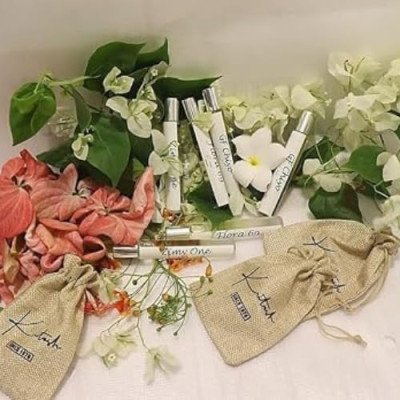
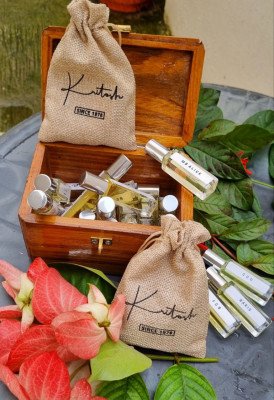
A small padded pouch, a soft cloth bag or a purpose-made fragrance sleeve protects the bottle from knocks and contains any minor seepage. A resealable plastic bag around the bottle, inside the pouch, gives a second layer. Think of it as a belt-and-braces approach: the pouch cushions, the bag contains.
Keep it apart from delicate things
Pack the bottle away from silk, light-coloured fabrics, leather, important documents, passports, printed tickets and electronics. If a bottle does leak, it is far better that it leaks into a dedicated bag than onto a favourite shirt. A toiletry bag or a separate zipped compartment is ideal.
Protect glass from impact
Place the bottle in the centre of your luggage, surrounded by soft items such as folded clothes. Avoid positioning it against the hard outer shell or at the edge of a bag where it might take the full force of a drop. In a cabin bag, keep it in an inner pocket rather than an outer one that may be squeezed against a locker.
Keep it away from prolonged heat and direct sunlight
Do not leave the bottle in a parked car, on a sunny seat or beside a radiator. Heat can encourage expansion and may affect the fragrance over time. This is a general precaution; we are not suggesting any specific temperature threshold.
Avoid pressure and friction
Tightly packed bags can press against a closure and gradually loosen it. Avoid placing heavy items directly on top of the bottle, and avoid positions where it will rub repeatedly against a hard object.
Check the bottle on arrival
When you reach your destination, open the bag and check the bottle first. If it has leaked, you can address it promptly. If it has not, store it upright in a cool, shaded place, such as a drawer, rather than leaving it in direct sun.
Consider a purpose-designed travel container
If your everyday bottle is delicate, consider transferring a small amount to a sturdy travel container designed for fragrance oils. Be careful with this: decant slowly and cleanly, use a container that is clean and dry, and label it. If you are unsure about the process, take advice from the seller. Note that decanting means the original packaging no longer accompanies the oil, which may matter for some uses and for sentimental reasons.
Check baggage restrictions before flying
Finally, before packing for a flight, check current rules for the airports you will use. We cover this in the next section.
Can You Carry Attar on a Flight?
This is the question readers most often ask, and it deserves a careful answer rather than a confident slogan.
The short answer
Attar is generally treated as a liquid or oil for aviation-security purposes. Whether and how you may carry it depends on the departure airport, the destination, the security authority, the airline, the route and the regulations in force at the time you travel. There is no single universal rule, and you should not assume that the rules you remember from one trip apply to the next.
What we found, and how to read it
For flights departing from Indian airports, secondary travel guides that summarise the framework report that the Bureau of Civil Aviation Security (BCAS) sets the rules for liquids, aerosols and gels, and that CISF screeners enforce them at the checkpoint. These guides describe a limit of 100 ml per container in cabin baggage, with containers placed in a single transparent resealable bag, and say that the limit is applied on both domestic and international departures, although enforcement may feel different at different airports. One guide also notes that what counts is the container's capacity, not the volume of liquid inside it, so a larger bottle that is only part full can still be refused.
Please read this with appropriate caution. The sources we reviewed were travel-advice articles, not the official BCAS circulars themselves, and rules can change. Before you fly, check the current guidance of BCAS, your airline and your departure airport. If you are travelling internationally, check the rules of any transit and destination airports as well, because each security authority applies its own regulations.
Cabin baggage
If your bottle is within the applicable container limit, it may be permitted in cabin baggage, usually when presented as part of your liquids bag at screening. Keep it accessible so that you can show it if asked. Because fragrance oils are small, many travellers find that a small attar bottle is the most straightforward way to carry fragrance by air. Remember that cabin baggage can be squeezed, so protection still matters.
Checked baggage
Larger containers are generally directed to checked baggage. In the hold, a bottle is not subject to the same cabin container limit, but it is more exposed to pressure, handling and temperature changes, and you cannot check on it during the journey. Pack it with extra care. Also check any airline-specific rules for items in checked baggage, since airlines may have their own policies.
Capacity versus contents
This point catches many travellers out. A bottle's declared capacity is not the same as the amount of oil it holds. A bottle labelled with a larger capacity but only partly filled may still be treated according to its capacity. If your bottle is close to a limit, look at the label and, if in doubt, choose a smaller container.
Packaging and security screening
Security staff may ask you to present liquids separately or to open a container. Keep the bottle in its pouch, but be prepared to take it out. Do not wrap it so thoroughly that it is difficult to inspect. A clearly labelled bottle can make the process smoother.
Domestic versus international journeys
Indian airport rules, as reported, apply to departures. If you are flying internationally, you must consider the rules at your destination and at any transit airport where you will go through security again. This is where travellers most often lose items: a bottle that was fine at the departure airport may be treated differently on a connecting leg. If you have a connection, check the transit airport's rules.
Why you should check current requirements
Security regulations are updated from time to time. News reports in recent years have discussed the possibility of new scanning technology relaxing certain liquid limits in India, but we have no verified evidence that a change applies to your airport on your date of travel. Always verify the current position before you fly.
A practical pre-flight checklist
- Check the current liquid rules for your departure airport and any transit or destination airports.
- Check your airline's baggage page for cabin and checked baggage policy.
- Confirm the container capacity on the bottle label.
- Choose a container within the applicable cabin limit if carrying it in hand baggage.
- Close the bottle securely and test it over a tissue.
- Place it in a protective pouch and a resealable bag.
- Keep it accessible for screening.
- Do not apply fragrance on the aircraft in a way that affects other passengers.
- Check the bottle on arrival.
How to Apply Attar While Travelling
Application is where practical and social awareness meet. The way you apply attar matters as much as which one you choose.
Start with a small amount
Attar is typically applied in a small quantity, and you can always add more later. Begin with a very light touch and see how it settles. This is both considerate and economical. Remember that your own sense of smell becomes accustomed to a scent after a while, so a fragrance that seems to have faded to you may still be noticeable to others.
Apply discreetly
Pulse points such as the wrists or the side of the neck are common places for application. In public settings, apply in a way that does not draw attention. A fingertip or roller allows a neat, private application that does not need an audience.
Follow product instructions
If the bottle or seller gives instructions, follow them. Formulations differ, and some products may come with specific guidance on skin application or use. We do not make claims about how any particular product behaves; the maker's own advice is the right reference.
Be considerate in shared spaces
- Aircraft cabins. The space is small, the air is recycled, and people cannot move away. Many travellers prefer to apply before or after the flight rather than during it, and to use very little if they do.
- Trains and buses. Similar principles apply: confined space, little ventilation, and passengers in close proximity.
- Hotels. Lifts and corridors are enclosed. A light application is usually enough.
- Offices and meeting rooms. Subtlety is the rule. People may be sensitive to scent, and a quiet presence is better than a noticeable one.
- Enclosed or crowded spaces generally. Less is more.
Avoid heavy application in hot weather or crowds
Heat and humidity can make a fragrance feel more intense to the wearer and those nearby. In crowded, hot places, a lighter application is generally more comfortable.
Skin care
Do not apply fragrance to broken, irritated or inflamed skin. If you notice redness, itching or discomfort, stop using the product and wash the area. If a reaction persists, consult a healthcare professional. If you have known sensitivities or allergies, consider patch testing small amounts before you travel, and seek professional advice if you are uncertain. We make no medical claims about any fragrance.
Consider your companions
Some people dislike strong scents; some experience headaches or discomfort. If you are travelling with family, friends or colleagues, a quick, friendly check can prevent problems.
Do not rely on longevity claims
How long a scent lasts depends on formulation, skin, environment and application. We do not promise a specific duration. If you want a scent to last through a long day, test it at home first.
Does Destination and Climate Matter When Choosing Attar?
Yes, it can, though the relationship is more subtle than the simple rules you may have heard.
How the environment shapes perception
Temperature, humidity, air movement, the clothes you wear and your own skin chemistry all influence how a scent feels. The same attar can seem rounder and more present in one environment and quieter in another. For that reason, we avoid absolute claims such as "woody attars are always best in winter" or "fresh scents never last in summer." These statements are tidy and unreliable.
A flexible framework
Rather than rules, think of questions.
- Hot and humid destinations. Warmth can make a scent feel more diffuse and sometimes more intense. Many travellers prefer a lighter application and a scent whose character feels comfortable in heat. If you tend to find rich scents heavy in warm weather, consider a fresher or softer profile.
- Cooler destinations. Cooler air can make a scent feel more contained. Some travellers enjoy richer, warmer profiles in the cold, although others prefer lighter scents all year.
- Dry climates. Skin that is dry may hold fragrance differently. Some people find that applying to moisturised skin changes how a scent behaves, though results vary and we make no claim about it.
- Air-conditioned environments. Cold, dry, recirculated air can alter how fragrance feels. A light application usually reads well indoors.
- Outdoor sightseeing. Wind, sun and movement carry scent away, and heat may amplify it. Consider reapplying lightly rather than starting heavy.
- Long days with multiple activities. If your day includes both outdoor activity and a formal evening, you may want to freshen up and apply again in the evening.
Perceived intensity changes
It is common to feel that a fragrance behaves differently on holiday. This may be due to climate, but also to the fact that you are walking more, sweating more, and have a different routine. If you are unsure, test your attar in conditions similar to those you expect before you travel.
Let your own experience lead
The best guide to how an attar behaves in your climate is your own observation. If a scent seems too strong in humid weather, use less. If it seems to fade in cool, dry air, try a slightly different application. Keep notes. They help with the next trip.
How to Choose an Attar That Works From Morning to Evening
A versatile attar is not a mystery; it is the result of a few honest questions.
A practical selection method
- Your preferred family. Which families do you instinctively enjoy? Start there rather than with what is fashionable.
- Desired intensity. Do you want a scent that stays quietly close to the skin, or one with more presence? For travel, quieter is generally easier.
- Your daily itinerary. Sketch the likely day: where you will be, with whom, and for how long.
- Professional versus social settings. If your trip mixes both, lean toward balance.
- Bottle convenience. Consider closure, size, material and ease of application.
- Personal comfort. Will you enjoy wearing it for several days in a row?
- Suitability for shared spaces. Test how it reads at close quarters.
- Trip duration. Match quantity to length.
- Budget. A travel attar need not be the most expensive bottle; it should be one you are happy to carry and use.
- Whether to carry more. Add a second bottle only if it will genuinely be used.
A decision guide
| If your trip is... | Consider... | Why |
|---|---|---|
| A short business trip | One composed, balanced attar in a secure bottle | Subtle, reliable, simple |
| A weekend getaway | One adaptable scent for day and evening | Easy, light, versatile |
| A family celebration | A soft, familiar-feeling scent applied lightly | Harmonious in close company |
| A beach or trekking trip | A sturdy bottle and a lighter application | Heat, movement, rough handling |
| A romantic holiday | A scent you personally love, plus an optional evening scent | Personal expression |
| A long journey | Apply minimally, preferably after arrival | Consideration for fellow passengers |
Test before you travel
Wear the attar at home for a full day. Notice how it feels at breakfast, at midday and in the evening. Notice whether you still enjoy it hours later. A trip is not the time to discover that a scent does not suit you.
Travel Attar as a Thoughtful Gift
For the frequent traveller in your life, a small bottle of attar can be a considered gift: personal, compact and useful.
Why it can work
- Personal preference first. The best gift reflects the recipient's taste. If you do not know their preferences, a balanced, gentle scent is generally safer than a bold one, and a consultation with the seller can help.
- Versatile profiles. A scent that works across different settings suits someone who moves between hotels, offices and dinners.
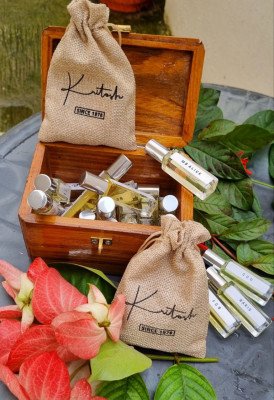
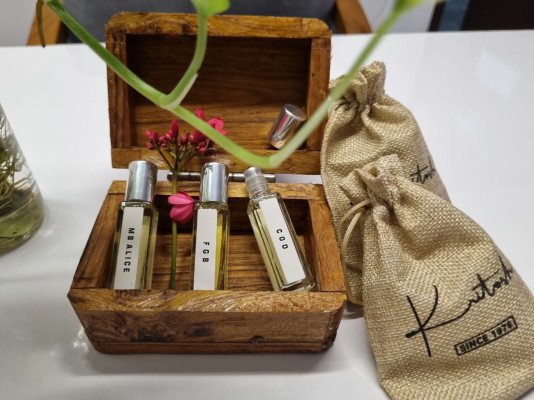
- Practical packaging. A well-sealed, compact bottle is easy to carry. Consider adding a protective pouch.
- Presentation. A thoughtful presentation makes the gift feel personal without needing to be elaborate.
- Travel habits. Consider how the person travels. A business traveller might appreciate a restrained scent; a holidaymaker, something more evocative.
- Scent and memory. A fragrance can become associated with a person or a time. Many people value that connection, and it is part of what makes fragrance a meaningful gift.
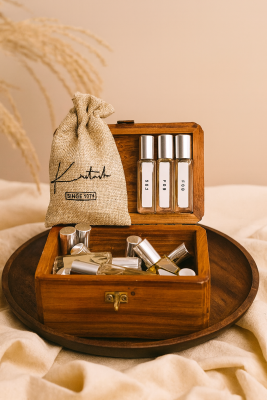
We do not claim that Kritosh offers a specific gift set, travel-size format or packaging; please check the current range and ask the team directly. If you are gifting, confirm the container size and the recipient's flying habits so that the bottle is practical for them.
The Kritosh Perspective: Fragrance, Heritage and the Journey
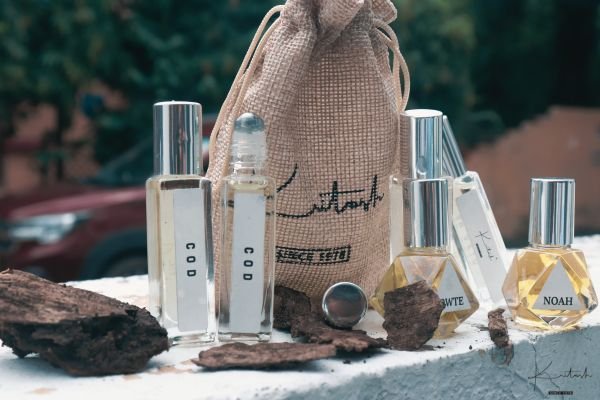
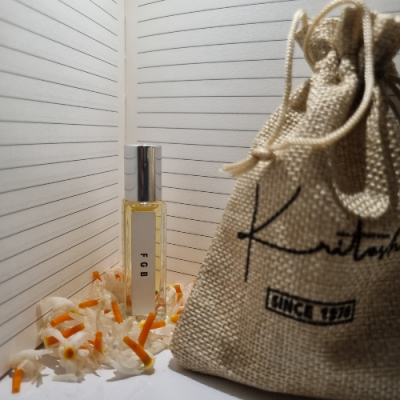
Kritosh Fragrances began in Bhopal in 1978, when Mr. Shrikrishna started what has grown into three generations of fragrance experience. That is the heart of the story, and we prefer to leave it unembroidered. What can be said with confidence is simply this: a family that has spent decades around attars and fragrance oils has, over time, watched how people choose, wear and remember scents.
It is a particular kind of knowledge, and it does not live in a specification sheet. It lives in the observation that people rarely buy a fragrance only for how it smells. They buy it for how it feels to return to: the way it marks a morning, a season, a person, a place. A scent attaches itself to memory with a stubbornness that few other objects can match. Many of us can recall a relative's fragrance, the smell of a particular shop, the quiet note of a festival long past, and the recollection arrives whole, without effort.
This is why travelling with a familiar fragrance can feel so consoling. When you carry a scent that belongs to your ordinary life into a city where nothing else does, you carry a small piece of home across the threshold. It does not make the hotel room yours, but it lends the room a note of continuity. For people who travel often, such small continuities are not trivial; they are part of how a restless schedule becomes bearable.
Bhopal, with its lakes, its old city lanes and its long familiarity with fragrance culture, is a natural point of reference for this thought. A traveller leaving the city carries something of it, even if only in the habit of reaching for a favourite scent before stepping out of the door. We do not wish to overstate this. A scent is not a souvenir of a place so much as a companion that has been shaped by the places in which it is worn.
It follows that the right approach to a travel attar is not to chase novelty but to choose with self-knowledge. Ask what you like, what you wear comfortably and what you would be happy to be reminded of years later. Bring that scent along, treat it with care, and let it do what a good companion does: be there, quietly, without demanding attention. At Kritosh, we believe fragrance is most meaningful when it is personal, and the best travel choices are the ones that feel entirely yours.
Common Mistakes to Avoid When Choosing Travel Attar
Most travel fragrance problems are small and preventable. Here are the ones we see most often, and how to avoid each.
Choosing a bottle without checking the closure. A beautiful bottle with a loose stopper is a risk. How to avoid it: test the closure, inspect the seal and consider a sturdier container.
Carrying more fragrance than necessary. Extra bottles add weight, risk and decisions. How to avoid it: decide how many applications you realistically need and pack a modest margin.
Ignoring applicable airline and airport rules. Assuming that last trip's experience applies to this one can lead to a confiscated bottle. How to avoid it: check current rules for the airports and airline you will use, including any transit points.
Leaving the bottle exposed to prolonged heat. Cars, sunny windowsills and hot luggage compartments are poor places for fragrance oils. How to avoid it: store the bottle in a shaded, cool-feeling spot and keep it out of direct sun.
Applying too much in enclosed spaces. A scent that is delightful in open air can become overwhelming in a lift or aircraft. How to avoid it: start with a very light application and let others set the limit.
Choosing a fragrance solely because it is popular. Popularity says little about whether you will enjoy wearing it for several days. How to avoid it: choose by preference, test at home and trust your own response.
Ignoring personal preference. A scent that suits the trip on paper but not your taste will not give you pleasure. How to avoid it: let your instinct lead and use the practical framework to refine rather than override it.
Assuming every attar has the same intensity. Formulations differ in concentration and character. How to avoid it: test each attar separately and adjust the quantity.
Packing glass bottles without protection. A drop or a squeeze can break glass. How to avoid it: use a padded pouch, a second containing bag and a central position in your luggage.
Failing to consider the actual itinerary. A trip full of outdoor activity needs a different approach from a conference week. How to avoid it: sketch each day, then choose accordingly.
The pattern behind these errors is common: choosing by appearance or habit rather than by the real conditions of the journey. A few minutes of thought before packing usually prevents most of them.
Building a Personal Travel Fragrance Routine
A routine does not need to be elaborate. It should make travel easier, not add tasks. Think of it as five quiet stages.
Before departure: prepare
A few days ahead, decide which attar or attars will go with you. Wear them at home so that you know how they behave. Inspect the bottle, test the closure and check the label for capacity. Write down any rules you need to remember for your flight.
Selecting your fragrance
Match your choice to the shape of the trip. Think about the settings, the people, the climate and the duration. If you are torn between two, pick the one you are more likely to wear comfortably every day, and treat the other as optional.
Packing safely
Pack with intention. Wipe the bottle, seal it, place it in a protective pouch and a resealable bag, and position it in an inner pocket or at the centre of your luggage. Keep it separate from delicate belongings and documents.
Applying considerately at your destination
On arrival, check the bottle first. Then adopt a simple pattern: apply lightly in the morning, avoid reapplying in enclosed spaces, and freshen up before evenings if you like. Notice how the scent behaves in the local climate, and adapt your quantity.
Storing it at your destination
Hotel rooms can be warm, sunny or humid. Keep the bottle upright in a drawer or a shaded corner of your bag, not on a windowsill or near a heater. Close it firmly after each use and wipe the neck if needed.
Reviewing after the trip
When you return, take a moment to reflect. Did the scent suit the trip? Did you carry too much or too little? Did the bottle travel well? Make a short note. Over a few trips, you will build a personal sense of what works, and the next journey will be easier.
The virtue of a routine is that it makes the good habits automatic. You do not need a complicated system; you need a few dependable steps that you perform without fuss.
A Practical Checklist Before You Travel
Save or print this list and use it alongside the current guidance from your airline and airport.
- Select a suitable fragrance that you enjoy and that fits the trip.
- Check the bottle and closure: clean neck, secure seal, no seepage when tested.
- Pack the bottle securely in a protective pouch and a resealable bag.
- Review current flight rules for the departure, transit and destination airports, and your airline.
- Confirm the container capacity is appropriate for cabin or checked baggage.
- Protect the fragrance from excessive heat and direct sunlight.
- Carry a reasonable quantity, not more than you will use.
- Plan to apply considerately, especially in shared or enclosed spaces.
- Keep the bottle away from delicate belongings, documents and electronics.
- Choose products that suit the trip, rather than the shelf.
- Pack only what is genuinely useful.
- Check the bottle on arrival and store it upright.
A Small Bottle, A Personal Signature
Somewhere on every journey there is a moment when you are tired and far from home, and something small reminds you of who you are. It might be a favourite song, a familiar phrase or the smell of something that belongs to your own life. A fragrance can do this quietly and without ceremony.
Choosing an attar for travel, then, is not only a question of bottle size or luggage rules, though those matter and deserve care. It is also a question of what you want with you when the surroundings are new: something versatile enough for different days, unobtrusive enough for shared spaces, and personal enough to feel like a signature rather than an accessory. The practical decisions, the closure, the pouch, the rules, the quantity, are what allow the personal one to do its work.
When you set out next, pack lightly and thoughtfully. Choose a scent you love. Protect it well. Use it with a gentle hand. And let a small bottle remind you, in whatever city you find yourself, of the quiet rituals that make a journey feel your own.
If you would like to explore attars with the care and heritage of a Bhopal family that has worked with fragrance since 1978, we invite you to discover the collections at Kritosh Fragrances.