user Account
Home All Products Account

How Traditional Attar Making Still Inspires Modern Perfumes

  • 18-May-2026
blog

Introduction: The Ancient Breath Inside Every Modern Bottle


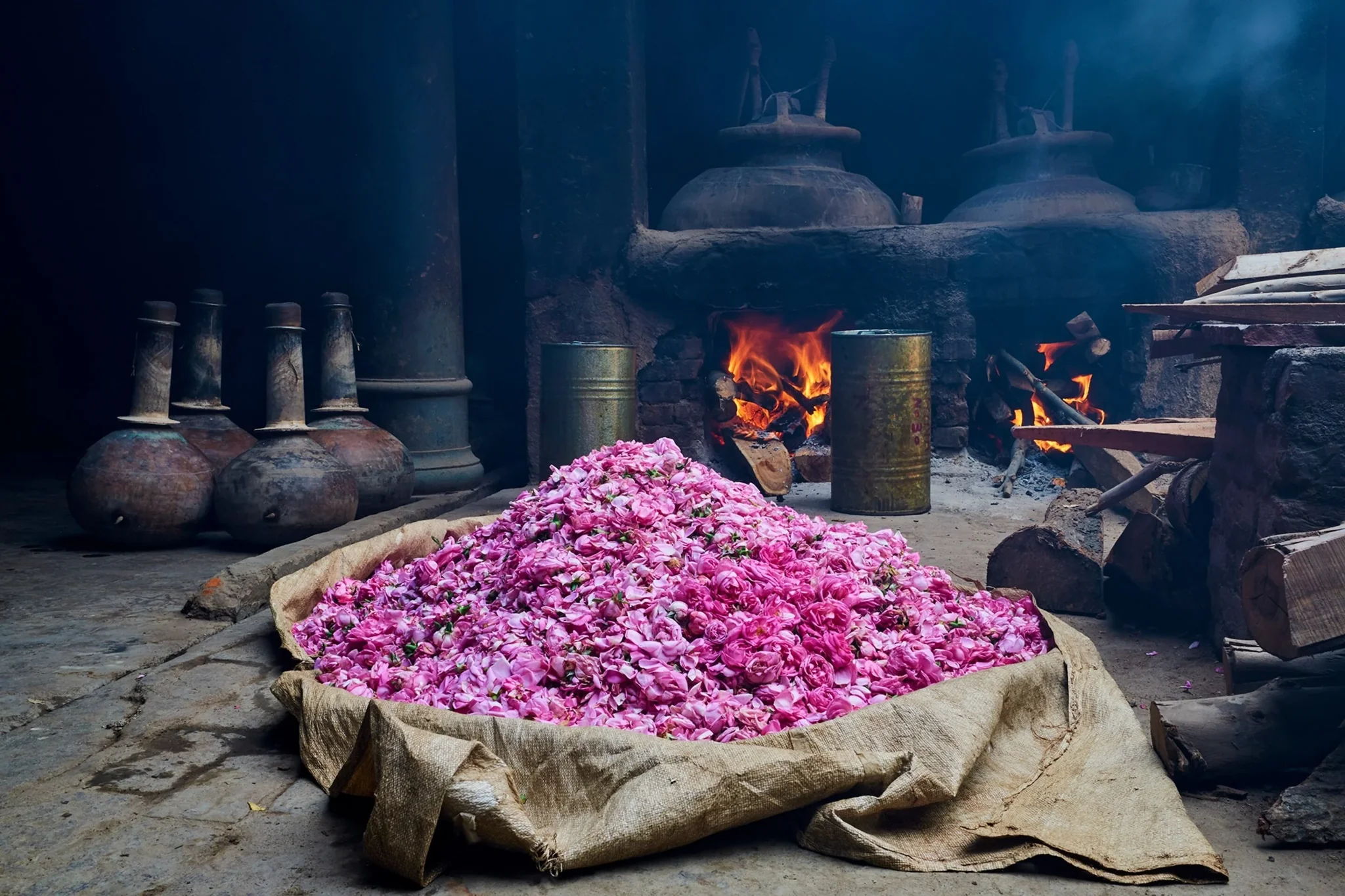
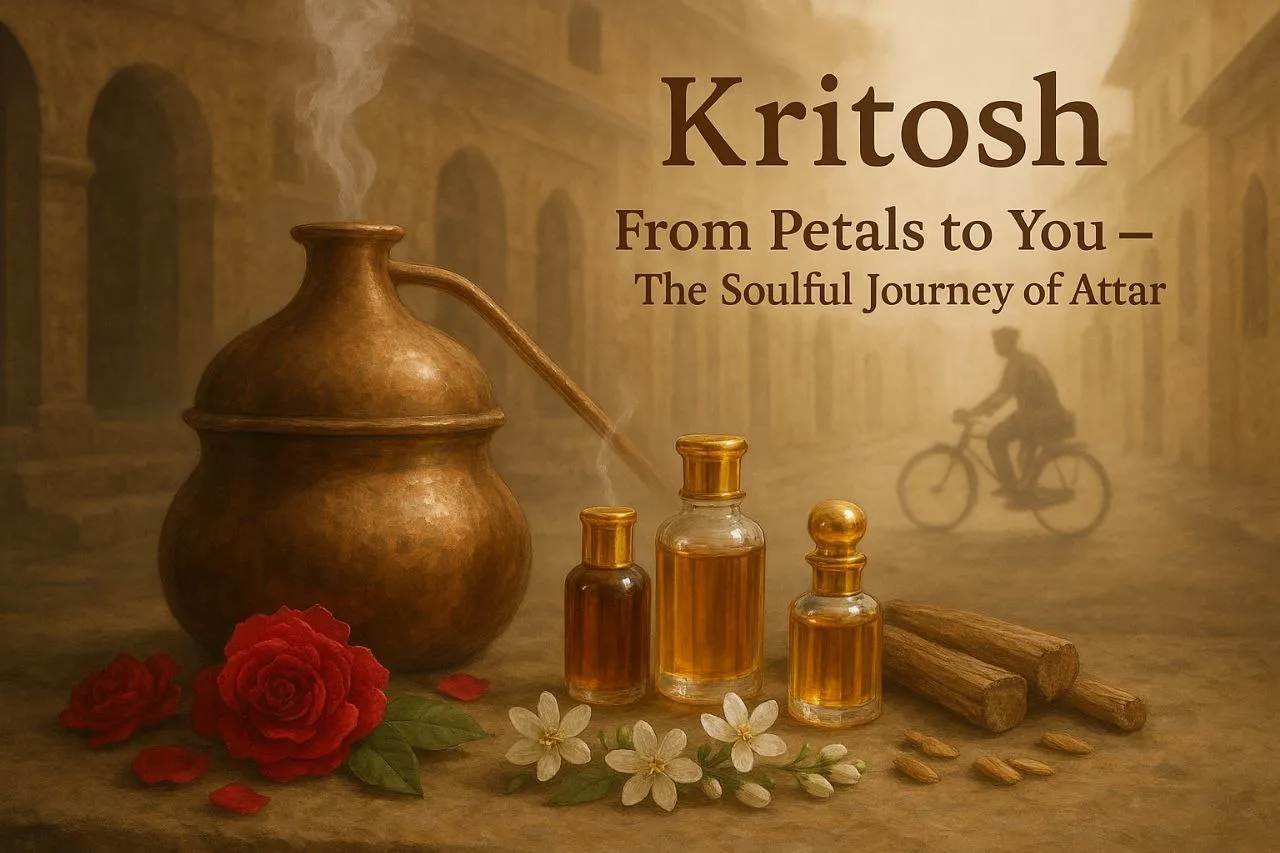
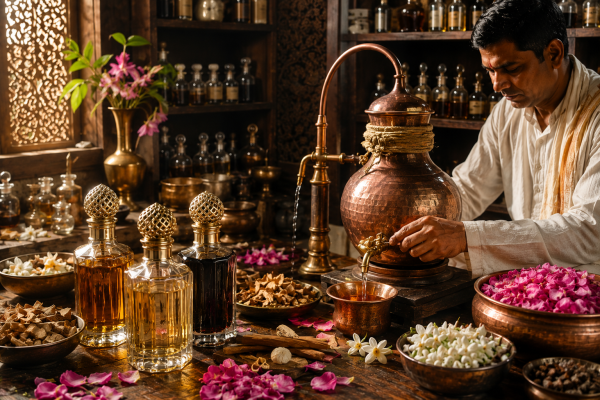
Close your eyes for a moment. Imagine a copper still sitting over a slow wood fire in a narrow lane in Kannauj, a city in Uttar Pradesh that has been exhaling fragrance for over two thousand years. Steam rises through a bamboo pipe. Somewhere in that rising vapor is the soul of a rose petal — picked before dawn when its oil content is at its most generous, its fragrance at its most alive. The steam condenses. Drops of essential oil fall, one by one, into a vessel of sandalwood. And something ancient, patient, and impossibly beautiful comes into being.

Now open your eyes and consider this: that same process, that same philosophy, that same devotion to the living complexity of botanical ingredients, is shaping the fragrances sitting in the finest perfumeries from Paris to Dubai to Mumbai right now. The methods have been refined. The laboratories have become more sophisticated. The marketing has grown dramatically more expensive. But the soul at the center of every truly great modern fragrance traces a direct lineage back to the deg and bhapka — the copper still and bamboo pipe — of the Indian attar maker.

This is not a story about nostalgia. It is a story about wisdom — specifically, the kind of wisdom that the fragrance industry has occasionally forgotten and then been forced, by consumer demand and creative necessity, to remember. Traditional attar making is not a relic. It is a resource. An inexhaustible source of inspiration, technique, and authentic beauty that continues to feed the imagination of perfumers worldwide — and that continues to produce, in its own right, some of the most extraordinary fragrances available anywhere on earth.

At Kritosh Fragrances, this is not an abstract observation. It is the animating principle of everything the brand creates. Since 1978, Kritosh has existed at the point where tradition meets excellence — where the ancient art of Indian perfumery encounters the standards and sensibilities of the modern luxury fragrance consumer. In this article, we explore that intersection in depth: the history of traditional attar making, the ways in which it has shaped and continues to shape modern perfumery, and why, in a world saturated with synthetic fragrance shortcuts, the slow, careful, devotional approach of the Indian attar tradition has never been more relevant.


The Origins of Indian Perfumery: A History Written in Scent


Attar Before Perfume Had a Name


The human relationship with fragrance is older than writing, older than commerce, older — perhaps — than most of the things we consider foundational to civilization. In the Indus Valley civilization, which flourished in the northwestern reaches of the Indian subcontinent from roughly 3300 to 1300 BCE, archaeologists have uncovered evidence of sophisticated distillation apparatus — terracotta vessels that appear to have been used for extracting aromatic plant materials. These are among the earliest known examples of perfume production anywhere in the world.

In ancient India, fragrance was inseparable from spiritual practice, medical theory, and social identity. The Ayurvedic texts — among the oldest systematic medical documents in human history — contain detailed formulations for aromatic preparations using flowers, resins, woods, and roots. The Sanskrit word gandha, meaning fragrance, appears throughout these texts not as a luxury descriptor but as a category of medical and spiritual substance. Smell, in the Indian philosophical tradition, was the sense most intimately connected to the earth element — the most grounding, most anchoring, most fundamentally real of sensory experiences.

This deep cultural respect for fragrance created the conditions in which Indian perfumery could develop not merely as a craft but as an art form — one capable of expressing philosophical ideas, invoking spiritual states, and communicating social information with extraordinary subtlety.


The Mughal Golden Age of Fragrance


If ancient India provided the philosophical foundation of Indian perfumery, it was the Mughal era — particularly the courts of Akbar, Jahangir, and Shah Jahan — that elevated the craft to its highest historical expression. The Mughals brought with them from Central Asia an already sophisticated Persian fragrance tradition, and when this tradition encountered the extraordinary botanical richness of the Indian subcontinent, the result was nothing less than a revolution in olfactory art.

It was during this period that Kannauj — already an established center of fragrance production — became the undisputed capital of Indian perfumery. The city's artisans developed and refined the deg-bhapka distillation method that would become the defining technique of traditional attar making, and they applied it to an expanding palette of indigenous and imported ingredients. Rose, jasmine, vetiver, saffron, sandalwood, oud — these became the vocabulary of a fragrance language that grew increasingly sophisticated and nuanced under Mughal patronage.

The legendary story of Empress Nur Jahan discovering rose attar — so the tale goes, by noticing the film of oil floating on the surface of a rose-petal-infused bath — may be apocryphal, but it contains a truth: that the Mughal court was a place of such intense sensory cultivation that new fragrance discoveries could emerge from ordinary moments of beauty. Attar making, in this culture, was not an industry. It was a form of devotion.


The Ancient Art of Deg and Bhapka Distillation


How Attar Is Made: A Process Unlike Any Other


The deg-bhapka method of attar distillation is, at its core, a process of patient transformation — of coaxing the fragrant soul out of a botanical material through the gentle alchemy of steam and cold water. It has remained substantially unchanged for over five hundred years, and there are excellent reasons why.

The process begins with the selection and preparation of botanical materials — rose petals, jasmine flowers, vetiver roots, agarwood chips, or any of the dozens of other ingredients that form the vocabulary of traditional attar making. The quality of these materials is everything. Flowers are typically harvested at dawn, before the heat of the day begins to volatilize their most delicate aromatic compounds. The freshness of the material at the moment of distillation has a direct and significant impact on the quality of the resulting attar.

The botanical material is loaded into the deg — a large copper still that may hold anywhere from a few kilograms to several hundred kilograms of plant material, depending on the scale of the operation. Water is added, and the deg is sealed and placed over a carefully controlled fire. The quality of the fire — its intensity, its consistency, its precise temperature — is one of the master attar maker's most important variables to control, and it is controlled not by instruments but by experience and sensory judgment.

As the water heats, steam rises through the botanical material, carrying with it the volatile aromatic compounds from the flowers or roots or wood. This steam passes through a bamboo pipe — the chonga — into the bhapka, the receiving vessel, which is submerged in cool water. As the steam cools and condenses, it separates into two phases: an aromatic water layer and, floating on top, the concentrated essential oil that will become the attar.

This oil is carefully collected and combined with a base — traditionally Mysore sandalwood oil — that serves both as a carrier and as a fragrance ingredient in its own right. The resulting attar is aged in animal-hide vessels called kuppi, which gradually absorb moisture while allowing the fragrance to mature and develop complexity. This maturation process can take weeks, months, or in the case of truly exceptional attars, years.


Why the Deg-Bhapka Method Produces Superior Results


There is a tempting argument, in the age of industrial fragrance production, that traditional distillation methods are merely sentimental — that modern molecular extraction techniques can produce better, more consistent, more economical results. This argument is wrong, for reasons that are both chemical and philosophical.

Chemically, the deg-bhapka method operates at relatively low temperatures and low pressures, which means that many of the most delicate and complex aromatic molecules in the botanical material are preserved intact. These molecules are the ones that give a natural rose attar, for instance, its extraordinary complexity — its hundreds of distinct chemical compounds, each contributing its own subtle dimension to the whole. Higher-temperature industrial extraction methods, however efficient, tend to damage or destroy these delicate molecules, producing a result that captures the dominant aromatic character of the material but loses much of its nuance.

Philosophically, the deg-bhapka method requires and rewards a quality of attention that industrial methods deliberately eliminate: the sustained, educated, experiential engagement of a human being with the process of fragrance creation. The master attar maker who tends a deg over many hours is not merely a technician executing a procedure. They are an artist in conversation with their material — adjusting the fire, smelling the steam, making the hundreds of small judgments that distinguish a transcendent attar from a merely competent one. This intelligence — embodied, experiential, irreplaceable — is part of what ends up in the bottle.


Natural Ingredients That Define the Attar Tradition


The Botanical Vocabulary of Indian Perfumery


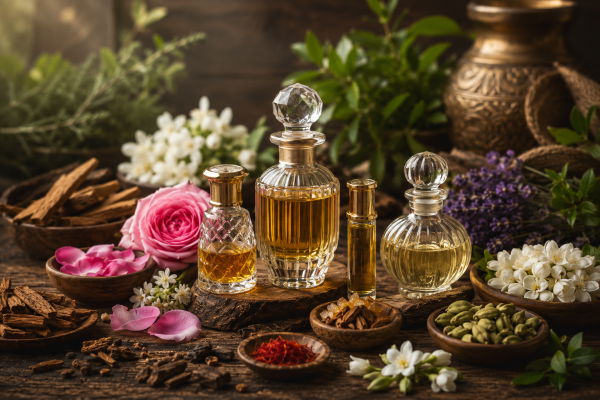
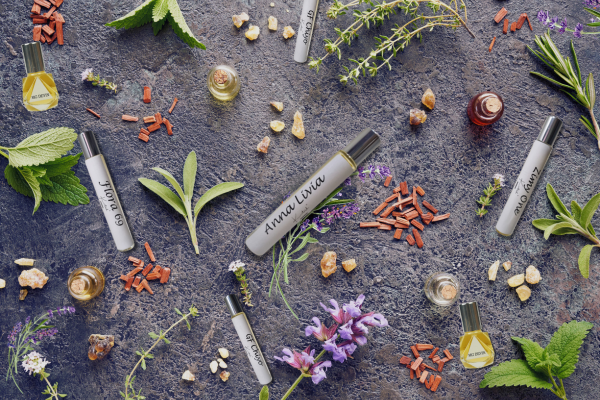
The traditional Indian attar has access to one of the most extraordinary botanical palettes available to any perfumery tradition in the world. The Indian subcontinent's extraordinary ecological diversity — from the Himalayan foothills to the Thar Desert to the Western Ghats — has produced an abundance of fragrant plants, roots, resins, and woods that have been central to Indian perfumery for millennia.

Rose (Rosa damascena and indigenous varieties) is, for many people, the defining ingredient of Indian attar. The rose cultivated around Kannauj and in Rajasthan is particularly prized — larger, heavier with essential oil, and richer in scent than many other varieties. The gulab attar produced from these roses is dense and voluptuous in a way that even the finest Bulgarian rose absolute rarely achieves.

Oud, or agarwood, is the resinous heartwood produced by Aquilaria trees when they respond to fungal infection. It is among the most complex, most expensive, and most sought-after fragrance ingredients in the world — and it has been central to Indian, Middle Eastern, and Southeast Asian perfumery for centuries. The oud produced in the northeastern Indian states of Assam and Manipur is considered among the finest in the world, prized for its particular balance of sweetness, smokiness, and woody depth.

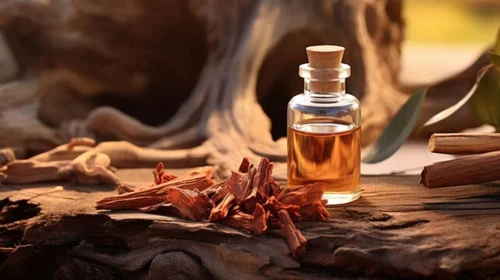
Sandalwood — specifically the Mysore sandalwood grown in Karnataka — has been the heartwood of the Indian attar tradition in the most literal sense. Mysore sandalwood oil, with its warm, creamy, woody-sweet character, serves as the traditional carrier for most Indian attars, contributing its own complex beauty while simultaneously acting as a fixative that extends the longevity of other fragrance components. The relative scarcity of genuine Mysore sandalwood today makes its presence in a Kritosh attar a genuine statement of commitment to quality.

Vetiver (Vetiveria zizanoides), known in India as khus, produces from its roots one of perfumery's most extraordinary base notes — an oil that is simultaneously earthy, smoky, woody, and cooling, with a depth and complexity that makes it one of the great natural fixatives and one of the great fragrance ingredients in its own right.

Jasmine (Jasminum sambac and Jasminum grandiflorum) produces, in its absolute form, one of the richest, most heady, and most complex floral materials in perfumery. The sambac variety, known as mogra in India, has a slightly different character from the grandiflorum — more heady, more indolic, more intensely floral — and both are central to many classic Indian attar compositions.

Saffron, kewra (pandanus flower), hina (a complex blend traditionally used in attar form), mitti (the attar of baked earth that captures the fragrance of the first monsoon rains) — the ingredient list of traditional Indian perfumery is a catalogue of extraordinary natural beauty, each material with its own story, its own season, its own emotional resonance.


Why Traditional Attars Last Longer: The Science and the Story


The longevity of traditional oil-based attars is one of their most celebrated qualities, and it has a straightforward scientific explanation that is worth understanding fully — because it also explains why so many modern luxury perfumes have moved toward oil-based formats inspired directly by the attar tradition.

When a conventional alcohol-based perfume is applied to skin, the ethanol carrier begins evaporating almost immediately. This evaporation is what produces the dramatic initial burst of fragrance that perfumers call the "opening" — a moment of concentrated scent intensity that can be genuinely beautiful but that also inevitably fades as the alcohol disappears. What remains on skin after the alcohol has evaporated are the heavier, slower-evaporating fragrance molecules — the base notes — and even these can dissipate within a few hours, particularly if the perfume's formulation relies heavily on synthetic ingredients.

Oil-based attar does not behave this way at all. The oil carrier — sandalwood oil, or a quality neutral carrier oil — has negligible evaporation from skin at body temperature. It does not disappear; it integrates. The oil blends with the natural sebum of the skin's surface, creating a microenvironment in which fragrance molecules evaporate slowly, continuously, and at a rate modulated by the warmth of the skin, the activity level of the wearer, and the ambient temperature.

The practical result of this different chemistry is a fragrance experience that is qualitatively different from that of an alcohol-based perfume — not merely longer but genuinely more intimate. An attar on the wrist does not project aggressively into the surrounding air. It radiates softly, warmly, from the skin — discovered by those in close proximity rather than announced to the whole room. This intimacy, this quality of fragrance as a private language between the wearer and those they choose to share it with, is part of the enduring emotional appeal of the attar tradition.

And then there is the evolution. An attar worn through a full day is not the same attar at 8 PM as it was at 8 AM. The top notes have long since revealed the heart, and the heart has deepened into the base, and the base has interacted with the chemistry of the wearer's own skin to produce something slightly different for every person who wears it. This evolution — this living quality of a fragrance that grows and changes rather than simply fading — is one of the greatest pleasures of wearing a traditional attar, and it is something that the most ambitious modern perfumery is actively working to recreate.


The Emotional Connection Between Scent and Heritage


There is a reason why the fragrance of haldi (turmeric) can return a person immediately to the kitchen of their childhood, or why the smell of mogra flowers can conjure the feeling of a specific summer evening twenty years ago with a vividness that photographs cannot match. This reason is neurological: of all the human senses, smell has the most direct connection to memory and emotion, through the olfactory bulb's immediate access to the amygdala and hippocampus.

But for many Indians — and for members of the Indian diaspora worldwide — traditional attars carry an additional layer of emotional significance that goes beyond personal memory. They are vessels of cultural memory — fragrances that carry within them the stories of the communities, the ceremonies, the spiritual practices, and the aesthetic sensibilities of a civilization thousands of years old.

The smell of oud in a traditional attar is not merely a pleasant base note. It is the same fragrance that was offered in temple rituals, burned in royal chambers, and worn by poets composing in classical Persian and Urdu. The smell of gulab attar is the smell of festivals, of weddings, of the rose-water blessing that marks a thousand sacred Indian moments. These associations are not incidental to the attar's appeal. They are inseparable from it.

This emotional and cultural depth is something that synthetic fragrance molecules simply cannot replicate — which is why, as more consumers seek fragrance experiences that are authentic, meaningful, and connected to something larger than a marketing campaign, traditional attars and the modern perfumes they inspire occupy an increasingly important position in the luxury fragrance market.


The Evolution of Modern Perfumery: From Chemistry to Art


How the Industrial Revolution Changed Fragrance Forever


The history of modern perfumery as we know it begins in the second half of the nineteenth century, when advances in organic chemistry made it possible to isolate, identify, and eventually synthesize specific aromatic molecules. This development transformed the fragrance industry with a speed and thoroughness that was simultaneously exhilarating and, in certain respects, impoverishing.

The exhilarating part: synthetic aromatic molecules gave perfumers access to scent effects that were entirely impossible with natural materials alone. Aldehydes, musks, and various synthetic aromatic compounds allowed perfumers to create fragrances of extraordinary modernity, clarity, and projection — fragrances that could not exist in nature and that expressed new aesthetic ideas with great precision. The great classic perfumes of the early twentieth century — many of them still considered the pinnacles of Western perfume art — were made possible by this synthetic revolution.

The impoverishing part is harder to articulate but real. As synthetic ingredients became cheaper and more sophisticated, the economics of fragrance production tilted dramatically in their favor. Natural ingredients — with their seasonal variations, their supply constraints, their labor-intensive harvesting and processing requirements — became increasingly expensive relative to synthetic alternatives that could be produced in unlimited quantities at consistent quality and dramatically lower cost. The result, in the mainstream fragrance market, was a gradual decline in the proportion of natural ingredients used in commercial perfumes — a decline in the depth, complexity, and longevity that only natural materials can provide.


The Niche Perfumery Revolution: A Return to Roots


Beginning in the 1990s and accelerating dramatically through the 2000s and 2010s, a counter-movement emerged within the fragrance industry. Niche perfumery — a sector of the market defined by its commitment to artistic integrity, natural ingredients, and limited production volumes — began attracting a growing community of fragrance enthusiasts who were dissatisfied with the homogenized, synthetic-dominant mainstream.

These enthusiasts, empowered by online communities and increasingly sophisticated fragrance education, discovered that the most interesting, most complex, most emotionally resonant fragrances in the world were not necessarily the most expensively marketed ones. Many of them discovered Indian attars — and found, in these ancient oil-based perfume oils, qualities that the most ambitious niche perfumery was only beginning to approach.

The influence flowed both ways. As Western niche perfumers discovered the Indian attar tradition, they incorporated its ingredients, its techniques, and its philosophical approach into their own work. As Indian fragrance brands — including Kritosh Fragrances — engaged with the global niche fragrance conversation, they found new ways to express the depth and sophistication of their own tradition to an international audience.


How Modern Perfumes Borrow from Traditional Attars


The Oud Revolution in Western Perfumery


Nothing illustrates the influence of traditional Indian and Middle Eastern attar on modern luxury perfumery more clearly than what the fragrance industry calls "the oud revolution." Beginning roughly in the early 2000s, oud — agarwood resin — went from being an ingredient largely unknown outside South Asia and the Middle East to being arguably the most fashionable luxury fragrance ingredient in the world.

Every major luxury fragrance house — from Dior to Tom Ford to Chanel to Jo Malone — has released at least one, and in many cases entire collections of, oud-based fragrances. Synthetic oud molecules have been developed for use in mass-market products. The word "oud" has become shorthand for a certain kind of dark, rich, woody-sweet luxury — a fragrance archetype that simply did not exist in mainstream Western perfumery before the influence of the attar tradition made it available.

The oud revolution is the most visible example of a broader phenomenon: the incorporation of attar tradition's core principles — the primacy of natural ingredients, the importance of depth and longevity, the embrace of complexity over immediate accessibility — into the DNA of modern luxury perfumery.


Oil Concentration and Longevity: The Attar Lesson


Another direct influence of traditional attar on modern perfumery is the shift toward higher fragrance concentration and oil-based formats. The parfum concentration — the highest concentration level in conventional perfumery, with 20-30% aromatic compound — is a direct acknowledgment that more oil, less alcohol, produces a more lasting and more skin-intimate fragrance experience.

Many of the most successful niche perfumery houses now offer their fragrances in oil-based formats alongside or instead of traditional alcohol-based sprays. Some have moved entirely to oil-based production, explicitly referencing the Indian and Middle Eastern attar tradition as their inspiration. The fragrance consumer of 2025 who chooses an oil-based perfume over a spray is, whether they know it or not, participating in a tradition of preference that stretches back over two thousand years of Indian perfumery.


Natural Complexity Over Synthetic Simplicity


Perhaps the deepest influence of traditional attar on modern perfumery is philosophical rather than technical: the shift in understanding of what makes a great fragrance great. Mainstream commercial perfumery, for much of the twentieth century, valued clarity, linearity, and immediate accessibility — fragrances that were easy to understand and wore predictably. Traditional attar values depth, complexity, evolution, and the kind of beauty that reveals itself gradually and rewardingly over time.

The most ambitious contemporary perfumers — operating in the niche and artisan spaces where fragrance culture is being most actively shaped — have decisively adopted the attar value system. They create fragrances that are deliberately complex, that reward sustained attention, that evolve meaningfully on skin, and that use natural ingredients in proportions that make economic sense only if you believe, as the attar tradition always has, that the quality of your ingredients is the non-negotiable foundation of the quality of your work.


The Rise of Natural and Alcohol-Free Fragrances


A Consumer Revolution That Was Always Coming


The contemporary fragrance consumer is more educated, more skeptical of synthetic ingredients, more interested in the provenance of what they put on their bodies, and more attuned to environmental sustainability than any previous generation of fragrance buyers. These characteristics — the product of broader cultural shifts toward wellness, transparency, and conscious consumption — have created an enormous and growing market for natural, alcohol-free fragrances.

This market is not new territory. It is, in a very real sense, a return to the territory that traditional attar always occupied — the territory of fragrance made from identifiable natural ingredients, carried in skin-compatible oils, produced through processes that respect both the material and the maker.

The growth in demand for alcohol-free perfumes reflects several distinct but related consumer concerns. Skin sensitivity is one: many people experience irritation, dryness, or allergic reactions to the high ethanol content of conventional perfumes, and oil-based alternatives eliminate this issue entirely. Religious practice is another: the Islamic prohibition on alcohol makes alcohol-free attar the fragrance format of choice for observant Muslim consumers — a market of enormous size and significant purchasing power. Environmental consciousness is a third: the production of natural attars through traditional methods has a dramatically lower carbon footprint than the industrial production of synthetic fragrance ingredients, and a growing segment of the fragrance market makes purchasing decisions accordingly.


Why Luxury Brands Still Use Traditional Techniques


The Authenticity Premium in Luxury Markets


In luxury goods markets across all categories, there is a well-established premium associated with traditional craftsmanship — the measurable additional value that consumers assign to a product made by hand, through time-honored methods, with genuine expertise. This premium is not irrational. It reflects a real difference in quality, in depth, in the kind of meaning that a product carries.

In the fragrance market specifically, the authenticity premium associated with traditional attar techniques is considerable and growing. A consumer choosing between a mass-market synthetic oud spray and a genuine handcrafted oud attar produced through traditional deg-bhapka distillation is not making a simple quality comparison. They are choosing between two fundamentally different relationships with fragrance — between fragrance as commodity and fragrance as craft, between something assembled in a factory and something made by a human being with exceptional skill and accumulated wisdom.

Luxury brands that incorporate traditional attar techniques — whether by using genuine attar as a component in their formulations, by sourcing ingredients from traditional attar-producing regions, or by explicitly referencing the attar tradition in their brand storytelling — gain access to this authenticity premium. They offer their customers not just a pleasant smell but an authentic connection to a living tradition of extraordinary cultural and aesthetic richness.


Sustainability in Traditional Perfumery


The Ethics of Natural Ingredients


The relationship between traditional perfumery and environmental sustainability is complex and genuinely important. Many of the most prized attar ingredients come from plant sources that face varying degrees of environmental pressure — sandalwood from overharvesting, oud-producing Aquilaria trees from deforestation and unsustainable tapping practices, rose cultivation from water-intensive agriculture.

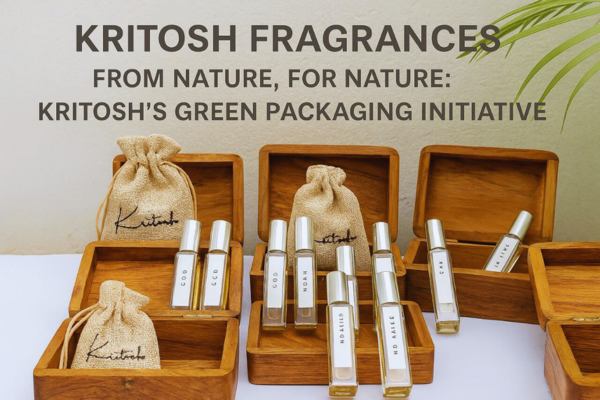
Responsible attar producers — including Kritosh Fragrances — are keenly aware of these pressures and committed to addressing them through sourcing practices that prioritize sustainability. This means working with suppliers who practice sustainable harvesting, supporting replanting programs for at-risk species, and being transparent with customers about the provenance and environmental impact of key ingredients.

It also means engaging honestly with the question of when and how responsibly produced synthetic aroma chemicals can serve as bridges toward more sustainable formulation — providing certain fragrance effects while reducing pressure on scarce natural resources — without compromising the integrity and authenticity of the finished product. This is not an easy conversation, and easy answers are not on offer. But it is a conversation that responsible brands must have, and Kritosh is committed to having it openly.


The Traditional Production Model as Environmental Advantage


In certain respects, traditional attar production is inherently more sustainable than industrial synthetic fragrance manufacturing. The deg-bhapka process uses wood fire as its heat source — not ideal in terms of air quality, though many traditional producers have moved toward cleaner fuel sources — and it produces no petrochemical waste, no synthetic byproduct streams, no molecular synthesis waste. The ingredients it transforms are biodegradable botanical materials. The products it produces are biodegradable oils.

Compare this to the production chain of a typical synthetic aromatic molecule — derived from petroleum feedstocks through multi-step chemical synthesis, producing various waste streams, packaged in petrochemical plastics — and the environmental argument for traditional methods becomes more compelling.


Fragrance Layering: An Ancient Art Reborn


How Traditional Attar Culture Taught the World to Layer


Fragrance layering — the practice of combining multiple fragrance products on the skin to create a personalized, complex, and unique scent — has become one of the major trends in contemporary perfumery, with major brands from Jo Malone to Byredo actively encouraging their customers to mix and match from their collections.

But layering is not a modern invention. It is an ancient practice deeply embedded in traditional attar culture, particularly in the Indian and Middle Eastern traditions where attar has been central to fragrance culture for millennia. The traditional practice of wearing multiple attars simultaneously — perhaps a sandalwood base, a rose heart, and a saffron accent — to create a personalized fragrance combination is the origin of everything that contemporary fragrance layering aspires to be.

Traditional attar's oil-based format makes it particularly well-suited to layering. Because attars do not contain alcohol, they do not interact aggressively with each other in the way that alcohol-based perfumes can when combined. They blend smoothly, gently, and intuitively on skin, allowing the wearer to build a fragrance composition that is genuinely their own — that reflects their personal sensibility and creative instinct rather than the vision of a single perfumer.


The Role of Oud, Rose, Sandalwood, Musk, and Floral Notes


The Pillars of Attar Fragrance Architecture


Every great fragrance tradition has its defining ingredients — the materials that appear again and again across its most celebrated compositions because they possess qualities that are simply irreplaceable. In the Indian attar tradition, five families of ingredients stand as the essential pillars of the craft: oud, rose, sandalwood, musk, and the broader category of floral notes including jasmine, kewra, and mogra.

Oud provides the archetype of depth — the dark, complex, multifaceted base note that can simultaneously suggest ancient forests, sacred smoke, sweet resin, and something almost animalic and alive. No synthetic recreation has captured its full complexity, which is why genuine oud remains, despite its extraordinary expense, the non-negotiable choice for serious attar composition.

Rose provides the archetype of beauty — the quintessential floral expression that is simultaneously accessible and inexhaustible in its complexity. The Indian rose attar tradition has produced, over centuries, a depth of expertise in rose fragrance that is simply unmatched anywhere else in the world.

Sandalwood provides the archetype of harmony — the creamy, warm, woody-sweet base that smooths edges, deepens other notes, and creates the sense of coherence and integration that distinguishes a great fragrance from a collection of interesting smells. Mysore sandalwood is the gold standard, and its presence in a composition is immediately felt even if not immediately identifiable.

Musk provides the archetype of intimacy — the skin-like quality that makes a fragrance feel personal, that makes it seem to emerge from the wearer's own body rather than from a bottle. Natural musk materials, from botanical sources, provide a warmth and radiance that synthetic musks struggle to fully replicate.

Floral notes — jasmine, mogra, kewra, marigold, lotus — provide the archetype of abundance, the sense of a world impossibly rich in natural beauty. The floral tradition in Indian attar is vast and nuanced, ranging from the delicate and transparent to the dense and heady, offering the attar maker an almost unlimited vocabulary for emotional expression.


Why Consumers Are Returning to Traditional Fragrances


The Search for Authentic Experience


Something significant has been happening in fragrance culture over the past decade, and it is worth examining carefully. After generations during which the trend in mainstream perfumery was consistently toward cleaner, fresher, more linear, more immediately accessible fragrances, a significant counter-movement has emerged — a desire, across a growing and influential segment of the fragrance market, for fragrances that are more: more complex, more natural, more emotionally resonant, more connected to tradition and craft.

This desire is part of a broader cultural shift toward authentic experience — toward the hand-thrown ceramic mug over the factory-produced one, toward the farmers' market over the supermarket, toward the craft brewery over the multinational. Across consumer culture, a meaningful segment of buyers has become skeptical of industrial production and genuinely interested in the stories, the people, and the traditions behind the things they choose to live with.

In the fragrance market, this skepticism has directed attention toward traditional attars and toward the modern luxury perfumes most directly inspired by them. These are fragrances that have a story — a real one, rooted in specific places, specific people, specific ingredients, and specific techniques developed over centuries. They have provenance. They have depth. They reward the kind of sustained attention that the best things in life always reward.


The Wellness Dimension of Natural Fragrance


There is also a wellness dimension to the return to traditional fragrance that deserves acknowledgment. As consumers become more aware of the potential skin and health implications of prolonged exposure to synthetic aromatic chemicals — and as the regulatory landscape around certain synthetic fragrance ingredients becomes more complex — the appeal of natural, oil-based attars as a fragrance choice grows accordingly.

The skin-compatibility of oil-based attars, their freedom from alcohol and synthetic carrier chemicals, and the fact that many traditional attar ingredients have genuine aromatherapeutic properties — sandalwood for its calming effects, vetiver for its grounding quality, rose for its mood-elevating properties — make them a compelling choice for the health-conscious fragrance consumer.


How Kritosh Fragrances Preserves and Honors Traditional Inspiration


A Brand Built on Living Tradition


Since its founding in 1978, Kritosh Fragrances has occupied a unique position in the Indian fragrance market: a brand that is genuinely rooted in the traditional Indian attar tradition, that has maintained and deepened this connection over nearly five decades, and that expresses this tradition through products of genuine luxury quality.

This is not a brand that has retrofitted a heritage narrative onto a product line built on synthetic shortcuts. The traditional attar tradition is not Kritosh's marketing position. It is Kritosh's actual practice — the living craft that its perfumers embody, that its sourcing relationships support, and that its products express in every drop.

Kritosh's commitment to traditional attar craftsmanship manifests in concrete ways: in the sourcing of genuine Mysore sandalwood rather than synthetic substitutes; in the use of naturally distilled rose, jasmine, and oud rather than laboratory reconstructions; in the maintenance of relationships with traditional attar makers in Kannauj whose families have been practicing this art for generations; and in the deliberate limitation of production volumes to what can be done well rather than what could be done at maximum industrial efficiency.


Blending Heritage with Modern Luxury


What distinguishes Kritosh Fragrances from a museum piece — from a brand that merely preserves tradition as a static artifact — is its commitment to evolution. The brand understands that tradition, to be alive, must grow. It must speak to its own time. It must find ways to express its core values in forms that are relevant to contemporary life and contemporary sensibilities.

This means that Kritosh's product development is not simply the repetition of classical attar formulations, however superb those formulations may be. It is the ongoing exploration of new expressions of the traditional fragrance philosophy — new compositions that bring the depth, the naturality, and the skin-intimacy of traditional attar into dialogue with contemporary ingredient discoveries, contemporary composition structures, and contemporary aesthetic sensibilities.

The result is a collection that spans from pure classical attars — rose, oud, sandalwood, jasmine in their most traditional expressions — to modern luxury compositions that incorporate these traditional ingredients and values into fragrance structures that speak the language of contemporary global perfumery. This breadth is not a contradiction. It is a reflection of the brand's conviction that the Indian attar tradition is not a fixed destination but a living journey — one that is enriched, not compromised, by confident engagement with the present.


The Future of Traditional Attars in Modern Markets


A Growing Global Audience for Attar Authenticity


The global market for natural, authentic, and artisan fragrances is growing at a rate that mainstream fragrance brands are scrambling to address. Market research consistently shows that the premium fragrance sector — defined by its commitment to quality over price point — is outperforming the mainstream, driven by a consumer demographic that is more educated, more discerning, and more willing to invest in genuine quality.

Within this growing premium market, traditional attars occupy a position of particular authority. They are the original premium natural fragrance — older than niche perfumery, older than the luxury fragrance brands that currently dominate the conversation, older than most of the concepts through which the contemporary fragrance market understands itself. The authenticity they offer is not manufactured. It is the real thing: a five-hundred-year-old tradition of extraordinary craftsmanship applied to extraordinary ingredients.

As awareness of this tradition spreads — through online fragrance communities, through the increasing coverage of Indian and Middle Eastern attar in international fragrance media, through the advocacy of enthusiastic customers who have discovered attars and want to share their discovery — the audience for genuine traditional attars is expanding well beyond the communities that have always known and loved them.


Technology in Service of Tradition


The future of traditional attar making is not one in which technology replaces the human artistry at the center of the craft. It is one in which technology serves that artistry — in which analytical chemistry helps attar makers better understand and preserve the quality of their ingredients, in which sustainable cultivation technology supports the production of premium botanical materials, in which digital platforms connect traditional producers with the global audience that increasingly appreciates what they make.

Kritosh Fragrances is actively engaged in this future. The brand is exploring how modern ingredient analysis can complement the sensory expertise of its master perfumers — not to replace human judgment but to extend and support it. It is investigating sustainable sourcing partnerships that can ensure the long-term availability of the premium natural ingredients on which its quality depends. And it is building the digital presence that allows it to tell its story to fragrance lovers worldwide who would recognize and value what Kritosh offers if only they could encounter it.


Conclusion: The Ancient Future of Fragrance
 

We began with a copper still in a narrow lane in Kannauj, and steam rising through a bamboo pipe, and rose oil falling drop by drop into sandalwood. We end in the same place — because the beginning and the end of great fragrance are always the same place. The devotion to natural beauty. The patience to let complexity develop at its own pace. The understanding that the finest things in the world take time to become what they are.
Traditional attar making has inspired modern perfumery in ways that are obvious — the oud revolution, the oil-based format trend, the growing premium on natural ingredients — and in ways that are less visible but perhaps more profound: in the standard of depth and longevity that it sets, in the philosophy of ingredient quality that it exemplifies, in the emotional and cultural richness that it demonstrates is possible when fragrance is made with genuine devotion.
At Kritosh Fragrances, this inspiration is not a talking point. It is a practice — one that has been ongoing since 1978, and that will continue to guide the brand as it grows, evolves, and finds new ways to share the extraordinary heritage of Indian perfumery with a world that is increasingly, and rightly, eager to know it.

The ancient flame still burns. The steam still rises. The attar still falls, drop by drop, into its sandalwood base — patient, aromatic, and impossibly alive.

Explore the Kritosh Fragrances collection and discover what happens when a five-thousand-year tradition meets the demands of modern luxury.


Frequently Asked Questions
 

1. What is traditional attar making and how does it differ from modern perfume production? Traditional attar making is an ancient Indian method of producing natural perfume oils through hydro-distillation — specifically the deg-bhapka process, in which botanical materials are steam-distilled and the resulting essential oil is collected in a sandalwood oil base. It differs from modern perfume production primarily in its exclusive use of natural ingredients, its oil-based (rather than alcohol-based) format, its low-temperature distillation process that preserves delicate aromatic compounds, and its reliance on human sensory expertise rather than automated industrial processes.

2. Why do traditional attars last longer than modern alcohol-based perfumes? Traditional attars last longer because their oil carrier does not evaporate from skin the way alcohol does. The attar's oil base integrates with the skin's natural oils, creating a microenvironment in which fragrance molecules evaporate very slowly and continuously over many hours — typically eight to twelve or more. Alcohol-based perfumes, by contrast, experience rapid carrier evaporation that drives off many fragrance molecules along with the alcohol, resulting in significantly shorter longevity.
3. How has traditional attar making influenced modern luxury perfumery? Traditional attar making has influenced modern luxury perfumery in several significant ways: through the introduction of oud (agarwood) as a global luxury ingredient; through the shift toward higher fragrance concentrations and oil-based formats in premium perfumery; through the emphasis on natural ingredient quality and depth of complexity over synthetic simplicity; and through the popularization of fragrance layering as a sophisticated consumer practice. Many of the defining trends in contemporary niche and luxury perfumery trace direct lineage to the Indian and Middle Eastern attar tradition.
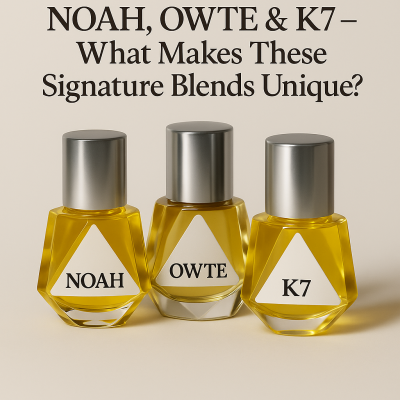
4. What ingredients are used in traditional Indian attars? Traditional Indian attars use a wide range of natural botanical ingredients, including rose (gulab), jasmine (mogra and chameli), oud (agarwood), sandalwood (chandan), vetiver (khus), saffron (kesar), kewra (pandanus flower), hina, and mitti (baked earth). These ingredients are steam-distilled through the traditional deg-bhapka process and collected in a sandalwood oil or neutral oil base. The quality of these raw materials — their freshness, their provenance, and the care of their cultivation and harvesting — is the primary determinant of the quality of the resulting attar.

5. What is the deg-bhapka method of attar distillation? The deg-bhapka method is the traditional Indian technique of attar distillation. It involves placing botanical materials in a copper still (the deg), which is heated over a controlled fire. The steam produced passes through a bamboo pipe (the chonga) into a receiving vessel (the bhapka) submerged in cool water. As the steam condenses, it separates into aromatic water and concentrated essential oil. This oil is collected and combined with a sandalwood oil base to create the finished attar. The process has remained substantially unchanged for over five hundred years and continues to be used by traditional attar makers in Kannauj and other Indian fragrance centers.

6. Are traditional attars alcohol-free? Why does this matter? Yes, traditional attars are entirely alcohol-free. They are oil-based products, using sandalwood oil or other natural carrier oils rather than ethanol. This matters for several reasons: it makes attars suitable for individuals with skin sensitivity to alcohol; it makes them appropriate for observant Muslims for whom alcohol in any form presents religious concerns; it gives them their characteristic longevity and skin-intimacy; and it aligns them with growing consumer preference for natural, chemical-minimal fragrance products.
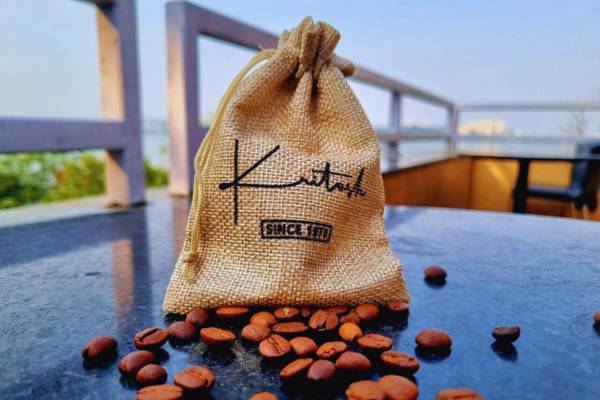
7. How does Kritosh Fragrances incorporate traditional attar techniques in its products? Kritosh Fragrances maintains active connections with traditional attar makers in Kannauj and other Indian fragrance centers, sources genuine premium natural ingredients including Mysore sandalwood, rose, oud, and jasmine, and produces all-oil-based fragrance products in the traditional attar format. The brand's master perfumers have deep expertise in traditional attar composition, and this expertise informs both the brand's classical attar offerings and its modern luxury compositions, which apply traditional principles and ingredients within contemporary fragrance structures.
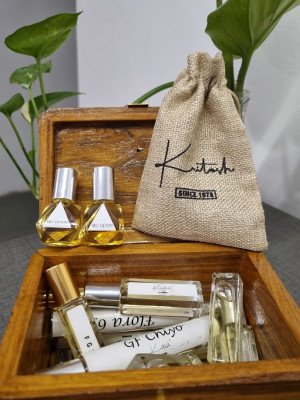
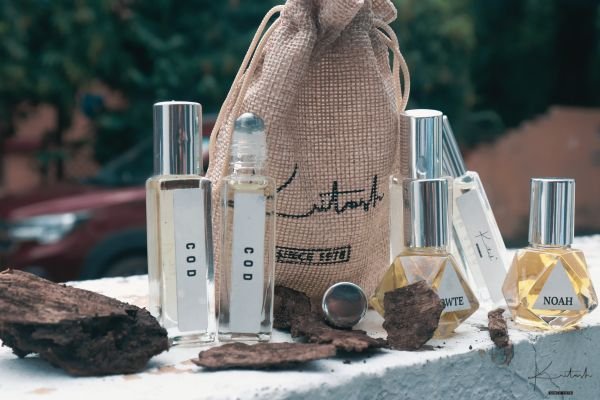
8. What is the difference between attar and regular perfume? The primary differences between attar and conventional perfume are: format (attar is oil-based; conventional perfume is alcohol-based); ingredient composition (attar traditionally uses only natural botanical ingredients; conventional perfume typically uses a blend of natural and synthetic materials); longevity (attar typically lasts significantly longer on skin); scent projection (attar projects close to the skin; conventional perfume radiates more widely into surrounding air); and cultural heritage (attar is the product of a two-thousand-year-old Indian and Middle Eastern tradition; conventional alcohol-based perfume emerged primarily from nineteenth-century European chemistry).
9. Why are consumers returning to traditional and natural fragrances? Consumers are returning to traditional and natural fragrances for a convergence of reasons: growing awareness of and concern about synthetic fragrance ingredients; desire for fragrance products with genuine provenance and authentic stories; the wellness appeal of natural botanical ingredients; the superior longevity and skin-intimacy of oil-based formats; increasing cultural pride in indigenous fragrance traditions; and a broader cultural shift toward authentic, artisan, and craft-oriented consumption across all luxury categories.
10. Is traditional attar making sustainable? Traditional attar making has certain inherent sustainability advantages over industrial synthetic fragrance production — it uses biodegradable botanical ingredients, produces no petrochemical waste, and can be powered by renewable fuel sources. However, some traditional attar ingredients, including sandalwood and oud-producing agarwood, face supply pressure from overharvesting and habitat loss, making sustainable sourcing practices essential. Responsible attar brands like Kritosh Fragrances actively support sustainable ingredient sourcing, replanting programs, and transparent supply chain practices to ensure the long-term health of the botanical materials their craft depends upon.

11. Can traditional attars be layered with modern perfumes? Yes, and this is one of the most exciting creative possibilities in contemporary fragrance culture. Traditional oil-based attars layer beautifully with modern alcohol-based perfumes, with other attars, and with fragrance body products such as lotions and oils. Because attars do not contain alcohol, they do not interact aggressively with other fragrance products — they blend smoothly and can add depth, longevity, and natural complexity to almost any fragrance combination. The practice of layering multiple attars is itself an ancient tradition in Indian and Middle Eastern fragrance culture, and it is the historical precursor to everything that contemporary fragrance layering aspires to achieve.

12. Where can I find authentic traditional attars inspired by the Indian heritage perfumery tradition? Kritosh Fragrances offers a complete collection of premium, handcrafted, alcohol-free attars rooted in the Indian perfumery tradition, ranging from pure classical compositions to modern luxury interpretations. All Kritosh products use high-quality natural ingredients sourced with care for provenance and sustainability, and are made by perfumers with deep expertise in the traditional attar craft. Explore the full Kritosh collection to discover the attar that becomes your signature.

Recent Posts

Item Added Successfully
  • Mobile
  • Shipping Details
  • Payment
 Order Summary 
Subtotal (28% GST included)
Coupon Discount0
Delivery ChargesFree shipping

To Pay